Public Accountability Record

R. David Yost Built a $78 Billion Opioid Distribution Empire. 806,000 Americans Died. He Was Never Held Accountable.

As CEO of AmerisourceBergen (1997–2011), Yost presided over one of the three companies most responsible for flooding America with opioids. On his watch, the DEA suspended his company's license. On his watch, executives joked about "Pillbillies." On his watch, a whistleblower alleged his company repackaged cancer drugs for profit. Then he retired with $568 million and was never held accountable.

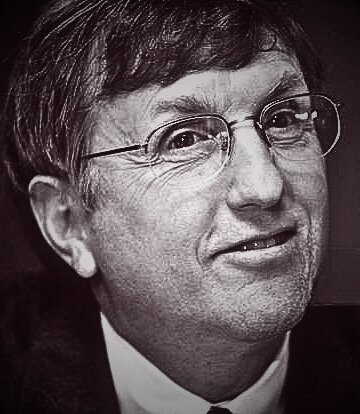
R. David Yost, former CEO of AmerisourceBergen
R. David Yost during his tenure as CEO of AmerisourceBergen
CEO, AmerisourceBergen — 1997 to 2011
Revenue under his leadership: $7B → $78B
Settlements for conduct during his tenure: $7.2 billion
DEA license suspension: April 2007
Personal holdings in Cencora: $568 million+
Personal accountability for the opioid crisis: None. Ever.
806,000
Americans Dead from Opioid Overdoses, 1999–2023

What He Built

R. David "Dave" Yost served as Chief Executive Officer of AmerisourceBergen Corporation from 1997 to 2011. During those 14 years, AmerisourceBergen was one of the three largest distributors of opioid medications in the United States. Every pill that moved from manufacturer to pharmacy passed through companies like his. He grew the operation from $7 billion to $78 billion in annual revenue.

During Yost's tenure, the opioid epidemic killed tens of thousands of Americans annually — more than 300,000 in total. His company's distribution network was the supply chain that made it possible. The DEA found his company failed to maintain controls against diversion. His head of compliance circulated jokes about "Pillbillies." A whistleblower alleged his executives knew about a scheme to repackage cancer drugs. And through all of it, the revenue kept climbing.

After Yost retired in 2011, the bill came due: $7.2 billion in settlements and fines — for conduct that occurred on his watch, under his leadership, during his 14 years as CEO. The company paid. He kept the $568 million. The company changed its name. R. David Yost was never charged, never fined, never investigated, and never held personally accountable in any way.

Timeline

  • 1997 Yost becomes CEO of AmeriSource Health Corporation. Company revenue: approximately $7 billion.
  • 2001 AmeriSource merges with Bergen Brunswig in a $7 billion deal, creating AmerisourceBergen. Yost becomes CEO and President of the combined entity.
  • April 2007 The DEA suspends AmerisourceBergen's Orlando distribution center's license for failure to maintain effective controls against diversion of controlled substances — specifically hydrocodone — to internet pharmacies.
  • 2010 Michael Mullen, a former AmerisourceBergen executive, files a sealed qui tam whistleblower complaint alleging that company subsidiaries operated an unlicensed facility where employees removed cancer drugs from original vials and repackaged them into untested containers. The complaint alleges "the former and current AmerisourceBergen CEOs" were aware of the scheme.
  • 2011 Internal company emails — introduced as evidence during the 2021 West Virginia opioid trial and spanning 2011 through 2017 — show Senior Vice President Chris Zimmerman circulating "Pillbillies" parody lyrics and forwarding an email titled "Oxycontin for kids." He was not disciplined or terminated.
  • July 1, 2011 Yost retires from AmerisourceBergen at age 63. Company revenue at retirement: $78 billion.
  • 2012 Yost joins the boards of Bank of America and Marsh & McLennan Companies.
  • 2016 The United States Air Force Academy names Yost a Distinguished Graduate — one of approximately 62 in the Academy's history — and dedicates Yost Plaza on the Doolittle Campus in his honor.
  • 2017–2018 AmerisourceBergen Specialty Group pleads guilty to criminal charges related to the Mullen whistleblower complaint. Combined civil and criminal settlement: $885 million.
  • 2018 U.S. Senator Claire McCaskill releases a Senate investigation revealing that AmerisourceBergen shipped approximately 650 million doses of opioids into Missouri alone over six years — yet filed only 224 suspicious order reports with the DEA during that period. McKesson, shipping the same volume, filed 16,714 reports. Cardinal Health, shipping half the volume, filed 5,125. McCaskill called the opioid crisis "a failure of basic human morality on the part of many pharmaceutical companies and distributors."
  • January 2022 AmerisourceBergen, McKesson, Cardinal Health, and Johnson & Johnson agree to pay $26 billion to settle opioid-related claims nationwide. AmerisourceBergen's share: approximately $6.1 billion over 18 years.
  • August 2023 AmerisourceBergen changes its name to Cencora, Inc.
  • 2024 Yost's reported holdings in Cencora are valued at over $568 million. He continues to serve on corporate boards. He has never been held personally accountable for any of the conduct that occurred during his tenure.

The Settlements

The conduct underlying these settlements occurred in substantial part during Yost's 14-year tenure as CEO.

Settlement Amount
National opioid settlement (AmerisourceBergen share, 2022) $6,100,000,000
Mullen whistleblower / drug adulteration (2017–2018) $885,000,000
Ohio counties opioid settlement (2019) $260,000,000
Total $7,245,000,000

DEA Enforcement Action — On His Watch

On April 24, 2007, the U.S. Drug Enforcement Administration suspended AmerisourceBergen's Orlando, Florida distribution center's license to distribute controlled substances. The DEA alleged that the facility — under Yost's leadership — had failed to maintain effective controls against diversion of hydrocodone to four internet pharmacies from January 2006 through January 2007. Hydrocodone. The drug that started the epidemic.

AmerisourceBergen settled with the DEA while "expressly denying" the allegations. The license was reinstated four months later. R. David Yost was CEO the entire time. He was not disciplined, investigated, or held personally accountable in any way.

The Mullen Whistleblower Case — On His Watch

In 2010 — while Yost was still CEO — Michael Mullen, a former chief operating officer of AmerisourceBergen Specialty Group, filed a qui tam whistleblower complaint in the Eastern District of New York. The complaint alleged that company subsidiaries had operated an unlicensed facility in which employees removed cancer drugs from their original manufacturer vials, pooled them into untested containers, and generated millions of dollars in illicit profits. Cancer drugs. Repackaged for profit.

The complaint explicitly alleged that "the former and current AmerisourceBergen CEOs" were aware of the scheme. The conduct described spanned from January 2001 through January 2014 — the entirety of Yost's tenure and beyond.

AmerisourceBergen Specialty Group ultimately pleaded guilty to criminal charges. The combined civil and criminal settlement totaled $885 million. Yost was never personally charged or held accountable.

The "Pillbillies" Emails — On His Watch

During the May 2021 opioid bellwether trial in West Virginia, internal AmerisourceBergen emails spanning from 2011 through 2017 were introduced as evidence. Senior Vice President Chris Zimmerman — the executive responsible for enforcing the company's legal obligation to halt suspicious opioid deliveries — had circulated parody lyrics about "Pillbillies" and forwarded an email titled "Oxycontin for kids." This was the culture at the top of AmerisourceBergen while Americans were dying by the tens of thousands.

Zimmerman was neither terminated nor disciplined. He continued in his role for years and testified in the company's defense during the 2022 Washington State opioid trial. The man who joked about the epidemic was put on the witness stand to defend the company's compliance record.

806,000 dead. $7.2 billion in fines. A company so toxic it had to change its name. And R. David Yost — the man who ran it for 14 years — has never been held accountable.

The Rewards

While 806,000 Americans were dying, R. David Yost was collecting honors. In 2016, the United States Air Force Academy named him a Distinguished Graduate — one of approximately 62 in the Academy's entire history — and dedicated Yost Plaza, an outdoor space on the Doolittle Campus featuring a seven-foot replica of the Academy's graduation ring, in his honor.

After retiring, Yost served on the boards of Bank of America Corporation (2012–2023), Marsh & McLennan Companies (2012–2023), and Johnson Controls International (2009–2023). He also served as a director of Aetna — a health insurance company that paid billions in claims for opioid addiction treatment and overdose hospitalizations caused in part by the epidemic his company helped create.

As of 2024, Yost's reported holdings in Cencora — the company formerly known as AmerisourceBergen — were valued at over $568 million.

The Air Force Academy's core values:
Integrity First. Service Before Self. Excellence in All We Do.
The Air Force Academy gave its highest alumni honor to a CEO whose company paid $7.2 billion in opioid settlements.
They named a plaza after him.
Veterans die of opioid overdoses at twice the civilian rate.

The pills distributed by AmerisourceBergen flooded VA hospitals and military communities across the country. The Air Force Academy has not reviewed, revoked, or publicly addressed the Distinguished Graduate Award conferred upon R. David Yost.

The Name Change

In August 2023, AmerisourceBergen Corporation changed its name to Cencora, Inc. The company said the new name reflected its "unified global presence." The AmerisourceBergen name had become synonymous with the opioid epidemic. You can change a name. You can't change 806,000 deaths.

The Question

R. David Yost ran one of the three companies most responsible for the worst drug epidemic in American history. More than 300,000 Americans died of drug overdoses during his 14 years as CEO. Approximately 150,000 of those deaths were opioid-specific. His company later paid $7.2 billion in settlements and fines for conduct during his tenure. He kept $568 million in stock. He received the Air Force Academy's highest honor. He has a plaza named after him. He sits on corporate boards.

He has never been charged, fined, investigated, or held personally accountable. He has never acknowledged any responsibility. No public record exists of any charitable contribution by Yost to opioid recovery, treatment, or prevention causes. The company paid $7.2 billion. He kept $568 million. Nobody has ever made him answer for any of it.

America is in a moment of reckoning with the wealthy and powerful — the executives, the billionaires, the corporate boards — who profit from systems that destroy ordinary people and then walk away untouched. The Sacklers got documentaries, congressional hearings, and their names ripped off museum walls. R. David Yost got a plaza and total impunity. He is not the only one. But he may be the most invisible.

In October 2013 — two years after Yost retired — the Wall Street Journal published a profile of Yost under the headline "CEO Quits to Spend Time With Family—Really." The federal complaint alleging he knew about a cancer drug repackaging scheme was not mentioned. The opioid epidemic was not mentioned. The DEA suspension was not mentioned. The paper found a nice man who loved his grandchildren.

Every fact on this page is sourced to public records, corporate filings, government documents, and published reporting. This is a public accountability record concerning a public figure's professional conduct as CEO of a publicly traded corporation.

Sources

  1. CDC. "Understanding the Opioid Overdose Epidemic." Centers for Disease Control and Prevention. cdc.gov
  2. AmerisourceBergen press release. "AmerisourceBergen CEO Dave Yost to Retire, Steve Collis Named Successor." March 14, 2011. investor.cencora.com
  3. AmerisourceBergen press release. "AmerisourceBergen Receives DEA Order to Temporarily Halt Distribution of Controlled Substances from Its Orlando, Florida Facility." April 24, 2007. investor.amerisourcebergen.com
  4. AmerisourceBergen press release. "AmerisourceBergen Signs Agreement with DEA Leading to Reinstatement." June 22, 2007. investor.cencora.com
  5. SEC Filing. AmerisourceBergen Form 10-K, Fiscal Year 2007. sec.gov
  6. Legal Newsline. "Judge dismisses motion by opioid distributor defendants, trial continues." March 10, 2022. legalnewsline.com
  7. US Air Force Academy Association of Graduates. "2016 Distinguished Graduate: R. David Yost." usafa.org
  8. Bussey, John. "CEO Quits to Spend Time With Family—Really." The Wall Street Journal, October 4, 2013. wsj.com
  9. McCaskill, Claire. U.S. Senate Committee on Homeland Security and Governmental Affairs. "Fueling an Epidemic: A Flood of 1.6 Billion Doses of Opioids into Missouri and the Need for Stronger DEA Enforcement." July 2018.
  10. CDC WONDER. Drug overdose mortality data, 1997–2011. Centers for Disease Control and Prevention.
  11. VA Office of Inspector General. Reports on VA opioid prescribing practices and veteran overdose rates.
  12. Wikipedia. "Cencora." en.wikipedia.org/wiki/Cencora
  13. NPR / Mountain State Spotlight. "Opioid Trial In West Virginia Comes Amid A National Reckoning For Big Pharma." May 26, 2021. npr.org
  14. Daily Caller. "Drug Exec Who Called Opioid Addicts 'Pillbillies' Won't Be Disciplined, Company Says." May 17, 2021. dailycaller.com
  15. Cencora, Inc. Press Release. "AmerisourceBergen becomes Cencora." August 30, 2023. investor.cencora.com
  16. MarketScreener. R. Yost — Positions, Relations and Network. Board service dates confirmed: Bank of America (2012–2023), Marsh & McLennan (2012–2023), Johnson Controls (2009–2023). marketscreener.com

Frequently Asked Questions

Who is R. David Yost?

R. David Yost is the former Chief Executive Officer of AmerisourceBergen Corporation, one of the three largest pharmaceutical distributors in the United States. He served as CEO from 1997 to 2011 — a 14-year tenure during which the company's revenue grew from $7 billion to $78 billion. He is a graduate of the United States Air Force Academy (Class of 1969) and received the Academy's Distinguished Graduate Award in 2016.

How much did AmerisourceBergen pay in opioid settlements?

AmerisourceBergen paid over $7.2 billion in opioid-related settlements and fines, including a $6.1 billion share of the national opioid distributor settlement and a $260 million settlement with Ohio counties. The conduct underlying these settlements occurred substantially during Yost's tenure as CEO. The company was subsequently renamed Cencora in 2023.

What is Yost Plaza at the Air Force Academy?

Yost Plaza is an outdoor space on the United States Air Force Academy's Doolittle Campus, dedicated in honor of R. David Yost following his receipt of the Distinguished Graduate Award in 2016. The plaza features a seven-foot replica of the Academy's graduation ring. The Air Force Academy has not publicly reviewed or addressed the honor in light of AmerisourceBergen's subsequent $7.2 billion in opioid settlements.

What were the "Pillbillies" emails?

The "Pillbillies" emails refer to internal AmerisourceBergen communications introduced as evidence during the 2021 opioid bellwether trial in West Virginia. Senior Vice President Chris Zimmerman — the executive responsible for the company's suspicious order monitoring program — had circulated parody lyrics referring to opioid-addicted customers as "Pillbillies" and forwarded an email titled "Oxycontin for kids." Zimmerman was not disciplined and later testified in the company's defense during the 2022 Washington State opioid trial.

Has R. David Yost ever spoken publicly about the opioid crisis?

No. As of the publication of this record, no public statement by R. David Yost regarding the opioid epidemic, AmerisourceBergen's role in it, the $7.2 billion in settlements, or the 806,000 Americans who died from opioid overdoses has ever been located in any news archive, public filing, or corporate record. No public record of charitable contributions by Yost to opioid recovery, treatment, or prevention organizations has been found.

What is AmerisourceBergen called now?

AmerisourceBergen Corporation changed its name to Cencora, Inc. in August 2023. The company stated the rebrand reflected its "unified global presence." It remains one of the largest pharmaceutical distributors in the world.